ja plugin dev components tool
LangBotの組み込みLocal Agentは、実行中にツールを呼び出して外部世界と対話します。現在、プラグインとMCPの両方を通じてツールを追加することがサポートされています。
1つのプラグインには任意の数のツールを含めることができます。プラグインディレクトリでコマンドlbp comp Toolを実行し、プロンプトに従ってツール設定を入力します。
➜  HelloPlugin > lbp comp Tool
Generating component Tool...
Tool name: get_weather_alerts
Tool description: Get weather alerts for a US state.
Component Tool generated successfully.
組件 Tool 生成成功。これにより、components/tools/ディレクトリにget_weather_alerts.yamlとget_weather_alerts.pyファイルが生成されます。.yamlファイルはツールの基本情報を定義し、.pyファイルはツールハンドラです:
➜  HelloPlugin > tree
...
├── components
│   ├── __init__.py
│   └── tools
│       ├── __init__.py
│       ├── get_weather_alerts.py
│       └── get_weather_alerts.yaml
...apiVersion: v1 # 変更しないでください
kind: Tool # 変更しないでください
metadata:
name: get_weather_alerts # ツール名、LLM認識用
label:
en_US: GetWeatherAlerts # ツール表示名、LangBot UIに表示、多言語対応
zh_Hans: GetWeatherAlerts
description:
en_US: 'Get weather alerts for a US state.' # ツール説明、LangBot UIに表示、多言語対応。オプション
zh_Hans: '獲取美国某个州的天気預警'
spec:
parameters: [] # ツールパラメータ、会話コンテキストに基づいてLLMが生成する値
llm_prompt: 'Get weather alerts for a US state.' # ツールプロンプト、LLMがこのツールを呼び出すかどうかを判断するため
execution:
python:
path: get_weather_alerts.py # ツールハンドラ、変更しないでください
attr: GetWeatherAlerts # ツールハンドラクラス名、get_weather_alerts.pyのクラス名と一致以下のコードがデフォルトで生成されます(components/tools/<tool_name>.py)。GetWeatherAlertsクラスのcallメソッドでこのツールの呼び出しと戻り値のロジックを実装する必要があります。
# Auto generated by LangBot Plugin SDK.
# Please refer to https://langbot.app/docs/en/plugin/dev/tutor.html for more details.
from __future__ import annotations

from typing import Any

from langbot_plugin.api.definition.components.tool.tool import Tool
from langbot_plugin.api.entities.builtin.provider import session as provider_session

class GetWeatherAlerts(Tool):

    async def call(self, params: dict[str, Any], session: provider_session.Session, query_id: int) -> str:
        """Fill your tool code here"""
return {}callメソッドでこのツールを実装します:
Note
天気検索ツールの例は、MCPのサーバー作成例から来ています。
from __future__ import annotations

from typing import Any

from langbot_plugin.api.definition.components.tool.tool import Tool
from langbot_plugin.api.entities.builtin.provider import session as provider_session
import httpx

# 定数
NWS_API_BASE = "https://api.weather.gov"
USER_AGENT = "weather-app/1.0"

async def make_nws_request(url: str) -> dict[str, Any] | None:
    """適切なエラー処理を使用してNWS APIにリクエストを行う。"""
    headers = {
        "User-Agent": USER_AGENT,
        "Accept": "application/geo+json"
    }
    async with httpx.AsyncClient() as client:
        try:
            response = await client.get(url, headers=headers, timeout=30.0)
            response.raise_for_status()
            return response.json()
        except Exception:
            return None

def format_alert(feature: dict) -> str:
    """アラート機能を読みやすい文字列にフォーマットする。"""
    props = feature["properties"]
    return f"""
Event: {props.get('event', 'Unknown')}
Area: {props.get('areaDesc', 'Unknown')}
Severity: {props.get('severity', 'Unknown')}
Description: {props.get('description', 'No description available')}
Instructions: {props.get('instruction', 'No specific instructions provided')}
"""

class GetWeatherAlerts(Tool):

    async def call(self, params: dict[str, Any], session: provider_session.Session, query_id: int) -> str:
        """Fill your tool code here"""
        state = params.get("state", "CA")

        url = f"{NWS_API_BASE}/alerts/active/area/{state}"
        data = await make_nws_request(url)

        if not data or "features" not in data:
            return "Unable to fetch alerts or no alerts found."

        if not data["features"]:
            return "No active alerts for this state."

        alerts = [format_alert(feature) for feature in data["features"]]
return "\n---\n".join(alerts)このツールでは、paramsからstateパラメータを取得し、NWS APIを呼び出してその州の天気アラートを取得する必要があるため、マニフェストファイルのparametersでstateパラメータを定義する必要があります。
parametersフォーマットはJSON Schemaに従い、OpenAI Function Calling機能でサポートされており、そのルートタイプはtype: objectに固定されています。propertiesにパラメータを追加し、requiredに必須パラメータの説明を追加してください。
...
spec:
  parameters:
    type: object  # 変更しないでください
    properties:  # 変更しないでください、ここにパラメータを追加
      state:
        type: string
        description: 'Two-letter US state code (e.g. CA, NY)'
    required:  # ここに必須パラメータの説明を追加
      - state
...このツールはhttpxライブラリも使用しているため、プラグインディレクトリのrequirements.txtにhttpx依存関係を追加する必要があります。
# HelloPlugin/requirements.txt
langbot-plugin  # デフォルトで既に存在
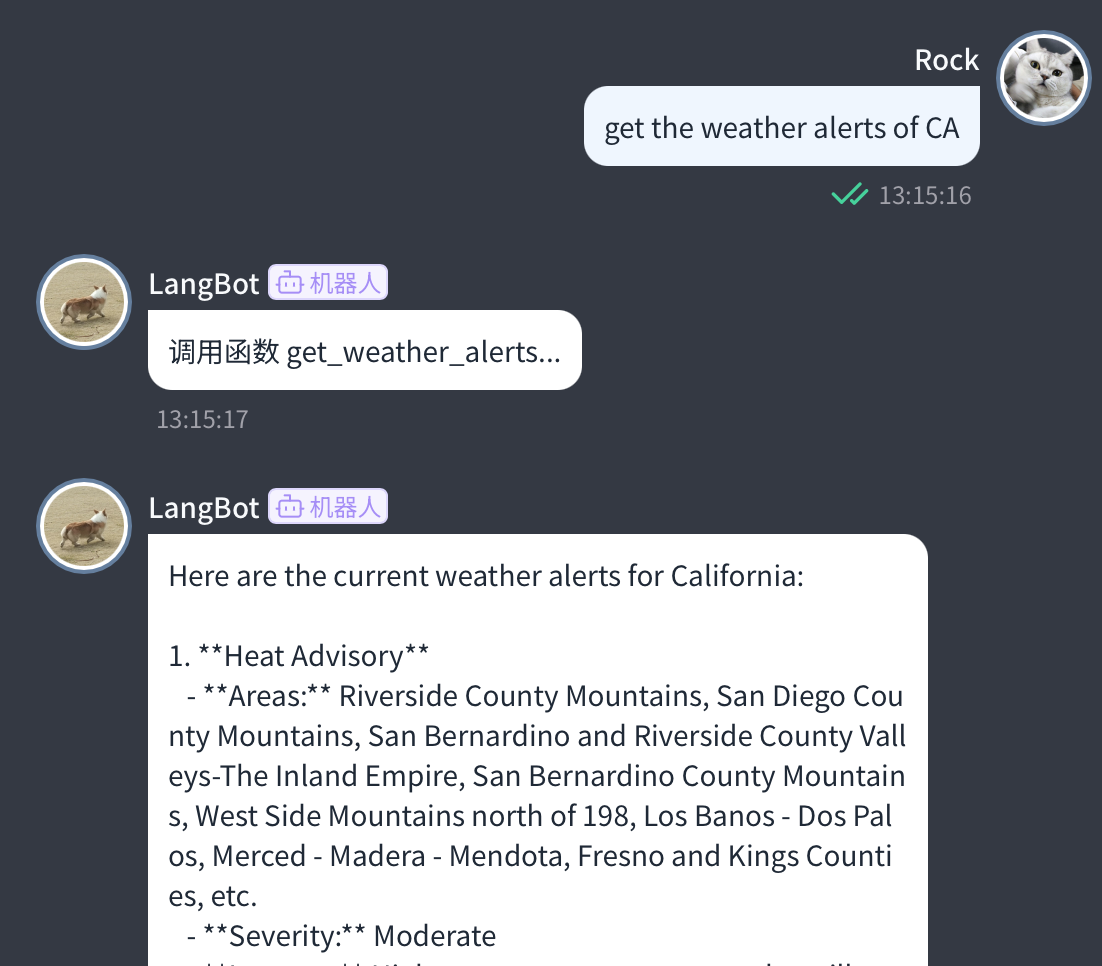
httpx次に、プラグインディレクトリでコマンドlbp runを実行してデバッグを開始します。LangBotでツール呼び出しをサポートするモデルを設定し、対応するパイプラインでそのモデルの使用を選択してこのツールを使用します。
1 つの Tool は複数のプロセッサと会話から呼び出されます(1 つのイベントで複数のプラグインプロセッサが起動し得ます):
- 設定は呼び出しごとに読み取ってください(
self.get_plugin_config()またはctx.config)。initialize()で読み取ってインスタンスにキャッシュしないでください。 - 呼び出し引数、戻り値、会話データをインスタンスフィールドやモジュールレベルの変数に残さないでください。会話の識別子は現在の呼び出しの
session/query_idから取得します。 - 同時呼び出しは同じインスタンスを共有するため、インスタンスフィールドは書き込みが交錯します。呼び出しをまたいで保持するデータは Host ストレージに置き、対応するプロセッサまたは会話の識別子をキーに含めてください。
- installation 単位でプロセス内キャッシュを保持する場合は、
on_installation_revoked(binding)で解放してください。
完全な仕様は認証プラグインと共有実行を参照してください。
ツールの基本的な使い方を学びました。次は:
- Tool が受け取る
sessionとquery_idを確認します。 - LangBot APIを確認します。